
Cultured Marble vs Natural Marble: What Is Cultured Marble?
If you are shopping for a bathroom vanity top or sink, you will often see the term cultured marble. Despite the name, cultured marble is not the same as natural marble. In this guide we explain what cultured marble is, how it is made, its pros and cons, and how it compares to a natural marble sink carved from real stone, so you can choose the right material for your bathroom.
What is cultured marble?
Cultured marble is a man-made material. It is produced by mixing crushed marble or limestone powder with a polyester resin, then pouring the mixture into a mold. Once it hardens, the surface is covered with a clear protective layer called a gel coat, which gives it its shine. Color and veining are added to the mixture with pigments, to imitate the look of real stone.
Cultured marble is most often used for one-piece vanity tops with an integrated sink, shower walls, shower pans and bathtub surrounds.
What is natural marble?
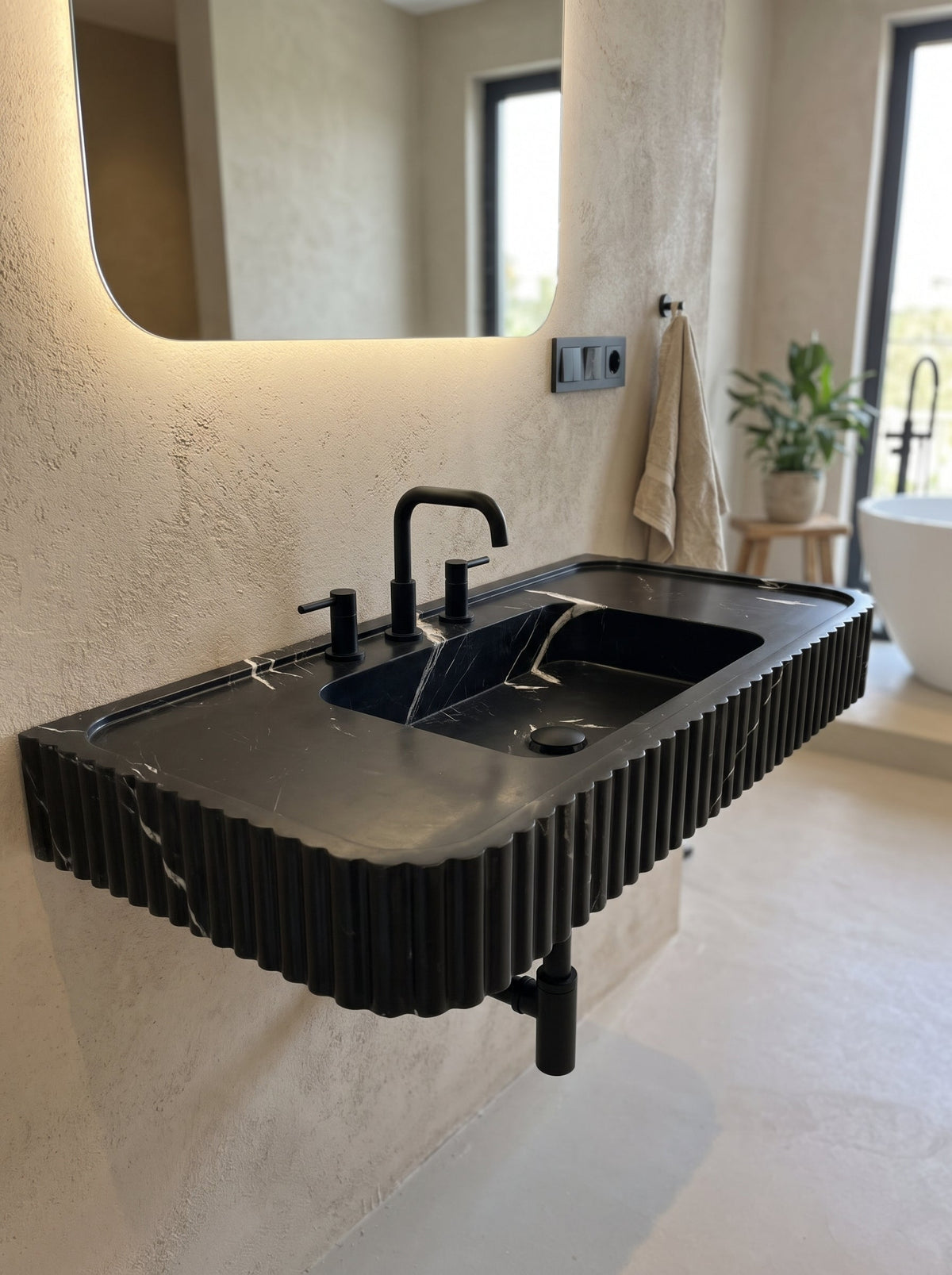
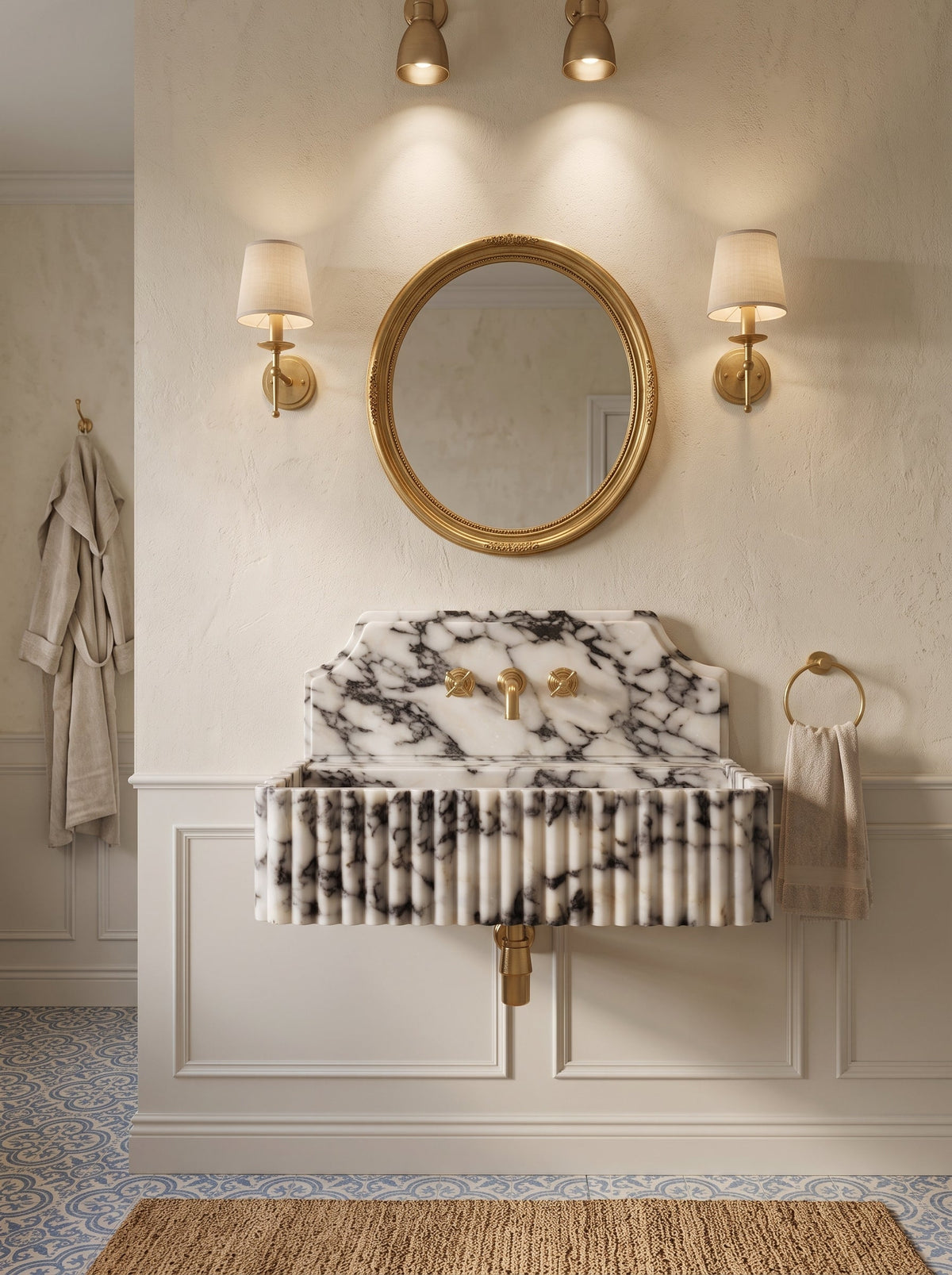
Natural marble is a stone formed over millions of years, when limestone was transformed by heat and pressure deep underground. It is quarried in large blocks and then cut, carved and polished. Its veins and colors are created by nature, so every piece is unique. A natural marble sink is carved from a single block, not poured into a mold.

Cultured marble vs natural marble
- How it is made: cultured marble is cast in a mold from stone powder and resin; natural marble is carved from a solid block of stone.
- Look: cultured marble has a uniform, often slightly glossy, plastic-like surface with printed-looking veins; natural marble has real depth, translucency and veining that formed in the earth.
- Uniqueness: cultured marble pieces from the same mold look alike; every natural marble piece is one of a kind.
- Surface: the gel coat on cultured marble is non-porous, but it can scratch, dull and craze with time; natural marble can be honed or re-polished to renew the surface.
- Repairs: a damaged gel coat is hard to repair invisibly; natural marble can often be restored by a stone professional.
- Shapes: cultured marble is limited to the shapes of standard molds; natural marble can be carved into fluted, curved, scalloped and custom designs.
- Cost: cultured marble is less expensive; natural marble costs more but lasts for generations.
- Value: cultured marble is a budget, practical choice; natural marble is a long-term investment that adds character and value to a home.
Pros and cons of cultured marble
Pros
- Affordable
- Non-porous gel coat that resists most everyday stains
- Seamless one-piece vanity tops with built-in sinks
- Lightweight compared with natural stone
Cons
- Looks less natural than real stone
- The gel coat can scratch, lose its shine or develop fine cracks over time, especially around the drain
- Limited shapes and sizes
- Harder to repair invisibly
Pros and cons of natural marble
Pros
- Authentic beauty and depth that cannot be copied
- Every piece is unique
- Can be carved into almost any design and size
- Can be renewed by honing or re-polishing
- Lasts for generations
Cons
- Higher cost
- Heavier, so it needs proper support
- Sensitive to acids, so it needs gentle, pH-neutral cleaning
Does cultured marble stain?
The gel coat on cultured marble is non-porous, so most everyday spills wipe away. Strong dyes, such as hair dye, and harsh or abrasive cleaners can still mark or dull the surface. Natural marble is porous, so it is sealed to help it resist stains, and spills should be wiped up promptly. Every Muka Marble sink is sealed in our workshop before it ships. See our guide on how to clean marble surfaces.
Which is right for you?
- Choose cultured marble if you need an affordable, practical vanity top for a rental, a guest bathroom or a tight budget.
- Choose natural marble if you want a sink with real character, a unique pattern and a design that becomes the centerpiece of the room, and that will last for decades.
Other materials compared
- Quartz: an engineered surface made from crushed quartz and resin. Very durable and uniform, but its veining is man-made. See how it compares in our Calacatta Gold marble guide.
- Travertine: a natural stone with a warm, earthy look. Read our travertine sink guide.
- Ceramic and porcelain: affordable and easy to clean, but mass-produced and less distinctive.
Cultured marble FAQ
Is cultured marble real marble?
Not really. It contains marble or limestone powder, but it is mixed with resin and cast in a mold, so it is a man-made material.
How long does cultured marble last?
It can last many years with care, but the gel coat surface usually shows wear sooner than natural stone.
Is natural marble worth the extra cost?
For many people, yes. A natural marble sink is unique, can be made in any shape and size, and can be renewed rather than replaced.
Can I get a natural marble sink in a custom size?
Yes. Every Muka Marble sink is carved to order from a single block of natural stone. Send us your measurements through our custom order page.
Choose real stone
If you want the real thing, explore our natural stones on the Materials page and browse the full marble sink collection. Every sink is carved from a single block, finished by hand and sealed before it ships, with free shipping to all countries.