
How to Clean Marble Surfaces: Countertops, Floors and Sinks
Marble is one of the most beautiful materials you can bring into a home, and it is much easier to care for than its reputation suggests. Knowing how to clean marble surfaces the right way keeps countertops, floors, vanities and sinks looking new for decades. The key is simple: use gentle, pH-neutral products, wipe spills quickly, and never use acids or abrasives. This guide covers daily cleaning, stain removal, etch marks, polishing and the mistakes to avoid.
Why marble needs a different cleaning routine
Marble is a natural stone made mostly of calcite. Two things make it different from ceramic, porcelain or quartz:
- Marble is porous. It has tiny pores that can absorb liquids like oil, wine or coffee if they sit on the surface. This is how stains form.
- Marble is sensitive to acids. Calcite reacts with acids such as lemon juice, vinegar and many household cleaners. The reaction leaves a dull, lighter spot called an etch mark.
Neither of these is a reason to avoid marble. They simply mean the cleaning products you use matter more than how often you clean.
What you need to clean marble
- Soft microfiber cloths (one damp, one dry)
- Warm water
- A pH-neutral stone cleaner, or a few drops of mild, fragrance-free dish soap
- A soft sponge or soft-bristle brush for textured or fluted areas
- A dust mop for marble floors
How to clean marble surfaces every day
- Wipe away crumbs, dust or grit first. Grit acts like sandpaper on a polished surface.
- Mix warm water with a small amount of pH-neutral stone cleaner or a few drops of mild dish soap.
- Wipe the surface with a damp microfiber cloth. For fluted, reeded or carved details, use a soft brush to reach into the grooves.
- Rinse the cloth in clean water and wipe again to remove any soap residue.
- Dry the surface with a clean, dry microfiber cloth. Drying prevents water spots and keeps polished marble shiny.
That is all most marble surfaces need on a daily basis. A quick wipe after use is far more effective than an occasional deep clean.
How to clean marble countertops
Kitchen and vanity countertops see the most spills, so prevention does most of the work:
- Wipe spills right away, especially wine, coffee, juice, tomato sauce and cooking oil.
- Use coasters under glasses and bottles, and trays under soap dispensers, perfume and oils.
- Use cutting boards and trivets. Do not cut directly on marble or place hot pans on it.
- Clean daily with warm water and a pH-neutral cleaner, then dry.
How to clean marble floors
- Dust mop or vacuum (with the beater bar off) regularly to remove grit.
- Damp mop with warm water and a pH-neutral stone cleaner. Wring the mop well so you are not flooding the floor.
- Rinse with clean water and dry with a soft cloth or dry mop.
- Place mats at entrances to catch sand and dirt before they reach the stone.
How to clean a marble sink
A marble bathroom sink is one of the easiest marble surfaces to maintain, because it is rinsed with water every day. A few tips:
- Wipe the basin with a damp cloth after use and dry the rim and deck now and then to avoid water spots.
- Keep toothpaste, mouthwash, hair products and cosmetics off the stone, or rinse them away quickly. Many of these products contain acids or dyes.
- Rinse soap residue from the basin so it does not build up as a film.
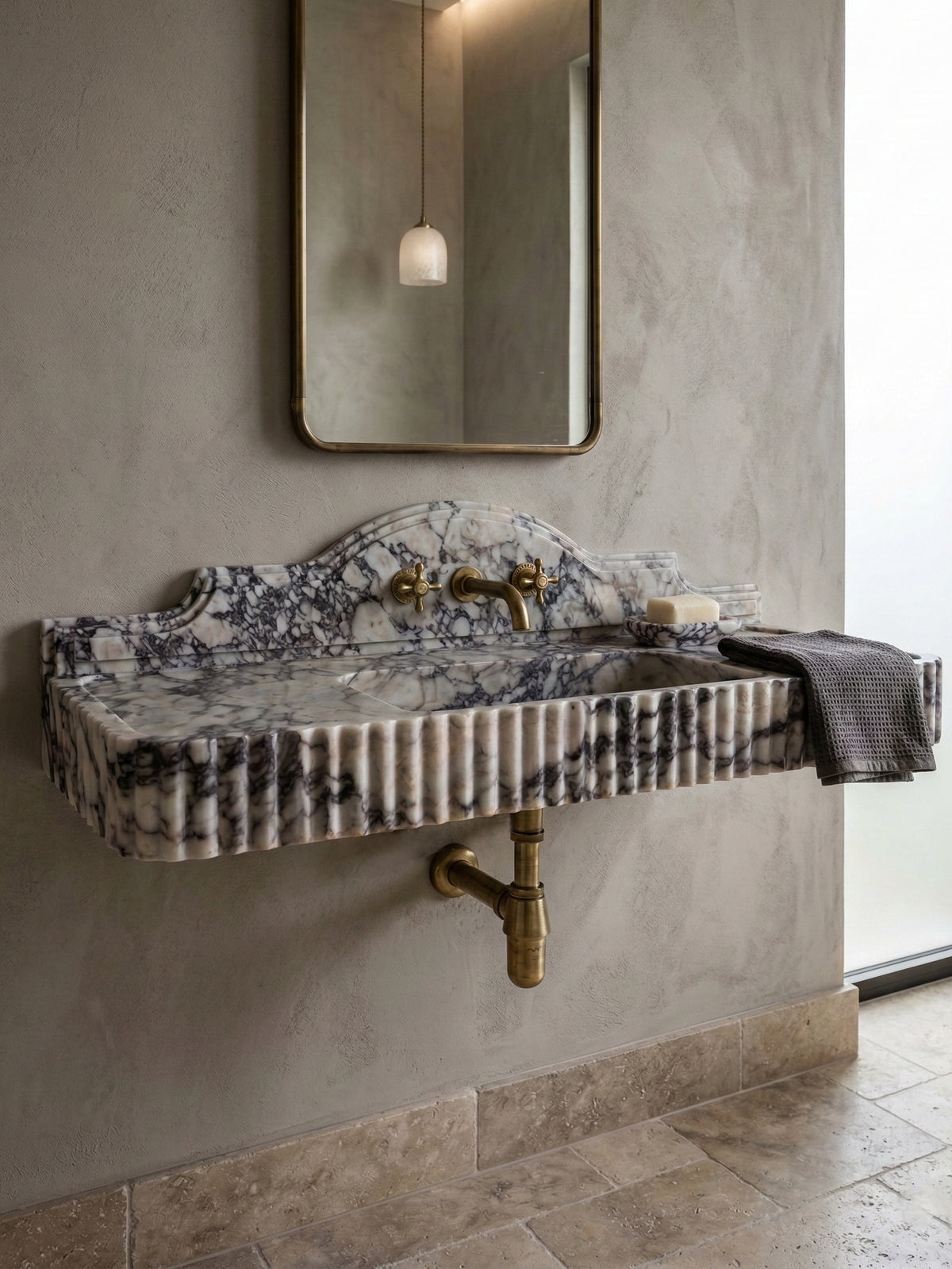
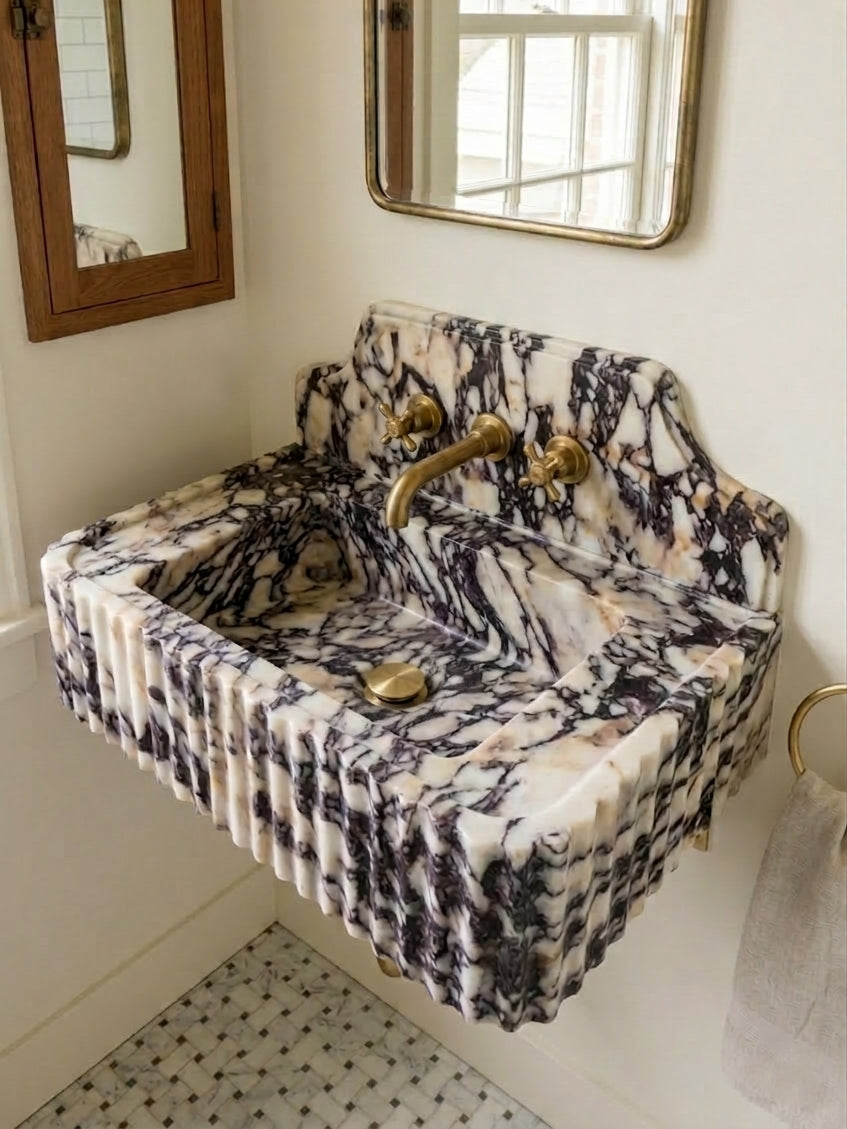
- Use a soft brush for fluted fronts or carved details.
Every Muka Marble sink is sealed with a protective coating before it ships, so it is ready to use the day it arrives. Day to day, a wipe with a damp cloth is all it needs.
How to remove stains from marble
First, identify the type of stain. Always test any treatment on a small, hidden area first, especially on dark or colored marble.
Organic stains (coffee, tea, wine, fruit)
These usually leave a pinkish-brown mark. Apply a few drops of 3% hydrogen peroxide to the stain, leave it for a short time, then rinse and dry. Hydrogen peroxide can lighten dark stone, so use it carefully on dark marble.
Oil-based stains (cooking oil, cosmetics, lotion)
Oil stains darken the stone. Make a poultice: mix baking soda with water into a paste about as thick as peanut butter. Spread it over the stain, cover it with plastic wrap, tape the edges and leave it for 24 to 48 hours. As the paste dries, it draws the oil out of the stone. Remove it with a plastic scraper, rinse and dry. Repeat if needed.
Water spots and hard water rings
Buff the area with a dry microfiber cloth. For stubborn mineral rings, a marble polishing powder made for stone usually helps. Avoid vinegar-based limescale removers.
Rust and deep or old stains
Rust and stains that have been in the stone for a long time are best handled by a stone restoration professional.
Etch marks vs stains: what is the difference?
A stain is darker than the stone, because something soaked into it. An etch mark is a dull, lighter or cloudy spot, because an acid has slightly dissolved the polished surface. Etching cannot be cleaned away, because nothing is sitting on the stone.
- Light etching on polished marble can often be improved with a marble polishing powder.
- Deep etching needs professional honing and polishing.
- Honed (matte) marble shows light etching much less than polished marble.
How to polish marble
Regular drying with a microfiber cloth keeps polished marble shiny. If the surface looks dull overall, a marble polishing powder or a polish made for natural stone can restore some gloss. Follow the product instructions, work in small areas and buff dry. For a full restoration, a stone professional can re-hone and re-polish the surface.
What not to use on marble
- Vinegar, lemon juice or any acidic cleaner
- Bleach or ammonia-based cleaners, including many glass cleaners
- Generic bathroom and kitchen sprays, limescale removers and tub and tile cleaners
- Abrasive powders, cream cleansers, scouring pads and steel wool
- Steam cleaners, which can weaken the sealer over time
If a product does not say it is safe for natural stone, do not use it on marble.
Sealing marble
A penetrating sealer fills the pores of the stone and makes it more resistant to stains. It does not make marble stain-proof or protect it from acids, so good habits still matter. A simple way to check a countertop or floor: drop a little water on the surface. If the stone darkens within a few minutes, it is absorbing water and may benefit from resealing. Our sinks are sealed before shipping, so you do not need to seal them when they arrive.
Marble cleaning FAQ
Can I use vinegar to clean marble?
No. Vinegar is an acid and will etch the surface, leaving dull spots.
Can I use dish soap on marble?
Yes, a few drops of mild dish soap in warm water is safe for regular cleaning. Rinse and dry afterwards so no film is left behind.
Is marble porous?
Yes. Marble has small pores that can absorb liquids, which is why spills should be wiped up quickly and why marble is usually sealed.
Can I use disinfecting wipes on marble?
Many disinfecting wipes contain acids or harsh chemicals that can dull marble over time. Use a stone-safe cleaner instead.
Is marble hard to maintain in a bathroom?
Not really. A sealed marble sink only needs a quick wipe with a damp cloth and the habit of keeping acidic products off the stone. Many people find it easier to live with than they expected.
Bring natural marble into your bathroom
Muka Marble makes handmade sinks from natural stone, including Calacatta Viola, Calacatta Gold, Carrara White, Rosso Levanto, Nero Marquina and travertine. Each sink is carved from a single block, sealed before shipping and made to your size if needed, with free shipping to all countries. Explore our marble sinks collection, or see popular designs like the fluted Calacatta Viola sink, the Carrara white marble sink and the travertine sink.