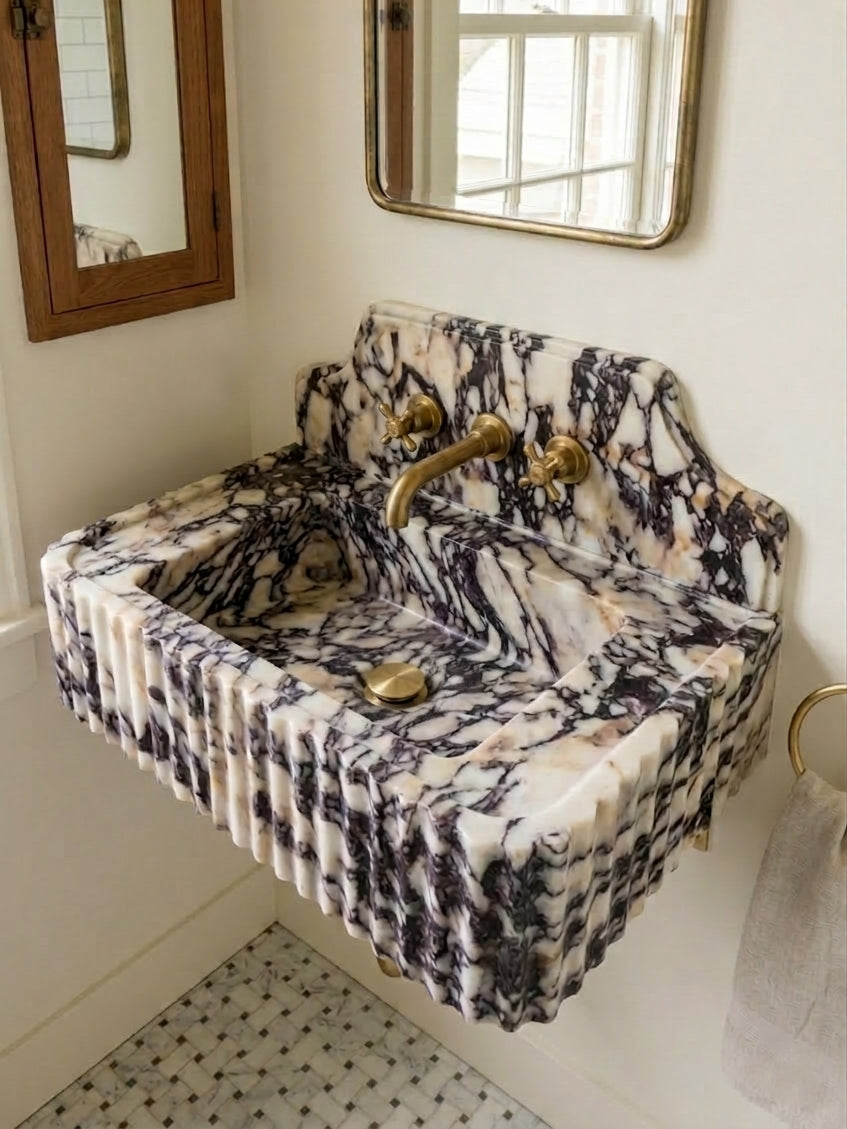

Floating Sink Ideas: How to Get a Floating Bathroom Vanity Look
A floating sink is one of the simplest ways to make a bathroom feel bigger, lighter and more modern. Mounted directly to the wall with nothing underneath, it shows more floor, makes cleaning easier and turns the sink itself into the centerpiece of the room. In this guide you will find floating sink ideas for every kind of bathroom, from tiny powder rooms to large primary baths, plus the practical details you need to plan one: mounting height, wall support, plumbing and the best materials.
What is a floating sink?
A floating sink is a bathroom sink mounted to the wall instead of sitting on a cabinet or pedestal. It is also called a wall-mounted or wall-hung sink. There are two main ways to get the floating look:
- A floating sink on its own: the basin is fixed to the wall with brackets, and the space below stays open.
- A floating vanity with a sink: a wall-mounted cabinet or shelf holds the sink, leaving the floor clear below.
Both give the same airy effect. A sink that floats on its own is the most minimal option, while a floating vanity adds storage.

Why choose a floating sink?
- More space: with an open floor below, even a small bathroom looks wider and less crowded.
- Easy cleaning: there is no cabinet base to collect dust and water, and you can mop right under the sink.
- Flexible height: a wall-mounted sink can be installed at the height that suits you, not the height a cabinet dictates.
- A sculptural look: with nothing around it, the shape and material of the sink become the focus of the room.
- Accessibility: a floating sink can leave knee space underneath for wheelchair users.
Floating sink ideas for every bathroom
1. A marble floating sink as the centerpiece
A floating marble sink carved from a single block of stone is a piece of functional sculpture. With no cabinet around it, the veining is visible from the front and the sides. Our Floating Wall Mounted Calacatta Viola Marble Sink mounts directly to the wall with concealed brackets, so the purple and burgundy veins look as if they are floating in mid-air.
2. A narrow floating sink for a powder room
In a small powder room or guest bath, every inch counts. A shallow wall-mounted sink keeps the walkway clear while still making a strong design statement. Our Wall Mounted Calacatta Viola Powder Room Sink is just 11 inches deep in the pictured size and is made for tight spaces.

3. A floating sink with an integrated backsplash
A sink with a backsplash carved from the same block protects the wall from splashes and gives you a place to mount a wall faucet. Mounted to the wall, it looks like one continuous piece of stone. The Calacatta Gold Marble Sink with Backsplash, with its white background and gold veining, is a bright, elegant example.
4. A long floating trough sink for two
If you are dreaming of a floating double sink vanity, consider a long trough sink instead of two separate basins. One wide basin with two faucets gives two people room to use the sink at the same time, with a clean, continuous line. Our Grand Fluted Calacatta Viola Marble Sink is pictured at 47 inches wide and can be made even longer.

5. A floating shelf with a vessel sink
A wall-mounted wood or stone shelf topped with a vessel sink is a warm, natural way to get the floating look, and the shelf gives you room for soap and a small plant. This works especially well with a stone vessel sink, like our Rounded Rectangular Travertine Vessel Sink on an oak or walnut shelf.
6. Exposed brass plumbing as a design detail
With a floating sink, the pipes under the basin are on show. Instead of hiding them, make them part of the design: a polished brass or matte black bottle trap and wall pipe look beautiful under a marble sink and tie in with the faucet.
7. Fluted stone for texture
Fluting, the vertical ribs carved into the front of a sink, catches the light and adds depth. On a floating sink, where the front of the basin is fully visible, fluting really shines. Our fluted designs, like the Large Fluted Calacatta Viola Sink, can be wall mounted with brackets as well. In fact, every sink in our collection except our vessel sinks can be mounted to the wall.
How to plan a floating sink
Mounting height
Most floating sinks are installed so that the top of the sink sits about 32 to 36 inches from the floor. Around 32 inches is the traditional height, while 34 to 36 inches is often called comfort height and suits taller people. For an accessible bathroom, ADA guidelines require the sink rim to be no higher than 34 inches, with knee clearance underneath. A floating sink lets you choose the height that works for your household.
Wall support
Natural stone is heavy, so the wall and the brackets matter. A marble floating sink should be fixed to solid brick or concrete, or to wood studs or blocking inside a drywall wall. If you are renovating, ask your contractor to add wood blocking behind the drywall where the sink will go before the wall is closed. Your installer should level the sink with a spirit level during installation.
Brackets
Concealed brackets sit under the sink and are not visible from the front or the sides, so the sink appears to float. Use brackets designed for stone sinks, such as our wall-mounted brackets for marble sinks, which are made to fit our sinks.
Plumbing
With a floating sink, the drain and water supply usually come out of the wall. Plan the position of the drain pipe so it lines up with the center of the sink, and choose a trap that looks good, since it will be visible. Wall-mounted faucets pair especially well with floating sinks because they keep the sink top clean and simple.
Storage
A sink that floats on its own does not have a cabinet below it. To keep storage, add a mirrored medicine cabinet, open shelves or a slim wall cabinet nearby. Many homeowners pair the sink with a wood vanity made after the sink arrives, so the cabinet fits the stone exactly.
Best materials for a floating sink
- Marble: elegant and unique, with veining that is fully visible on a floating sink. Calacatta Viola, Calacatta Gold and Carrara White are popular choices.
- Travertine: warm and earthy, ideal for organic, Mediterranean and Japandi bathrooms. Read more in our travertine sink guide.
- Ceramic: light and affordable, but with a more ordinary look.
Every Muka Marble sink is carved from a single block of natural stone, finished by hand and sealed before it ships. You can explore all of our stones on our Materials page.
Floating sink FAQ
Are floating sinks sturdy?
Yes, when they are installed correctly. A floating sink fixed with proper brackets into a solid wall, studs or blocking is very stable and can be used every day just like a sink on a cabinet.
Can you mount a marble sink on drywall?
Not on drywall alone. The brackets need to be screwed into wood studs or blocking behind the drywall, or into brick or concrete.
How high should a floating sink be?
Usually 32 to 36 inches from the floor to the top of the sink. For ADA accessibility, the rim should be no higher than 34 inches.
Can a floating sink be a double sink?
Yes. Two floating sinks can be mounted side by side, or you can choose one long trough sink with two faucets.
Can I get a floating marble sink in a custom size?
Yes. Every Muka Marble sink is made to order in the size you need. Send us your measurements on our custom order page.
Find your floating sink
A floating sink brings light, space and a sculptural focus to any bathroom. Explore our Floating Wall Mounted Calacatta Viola Sink and our Wall Mounted Powder Room Sink, or browse the full marble sink collection. Every design except our vessel sinks can be wall mounted, and each one is made to order in any of our stones and in any size, with free shipping to all countries.